
⚡Data Cloud Deep Dive : Data Ethics in Data Cloud
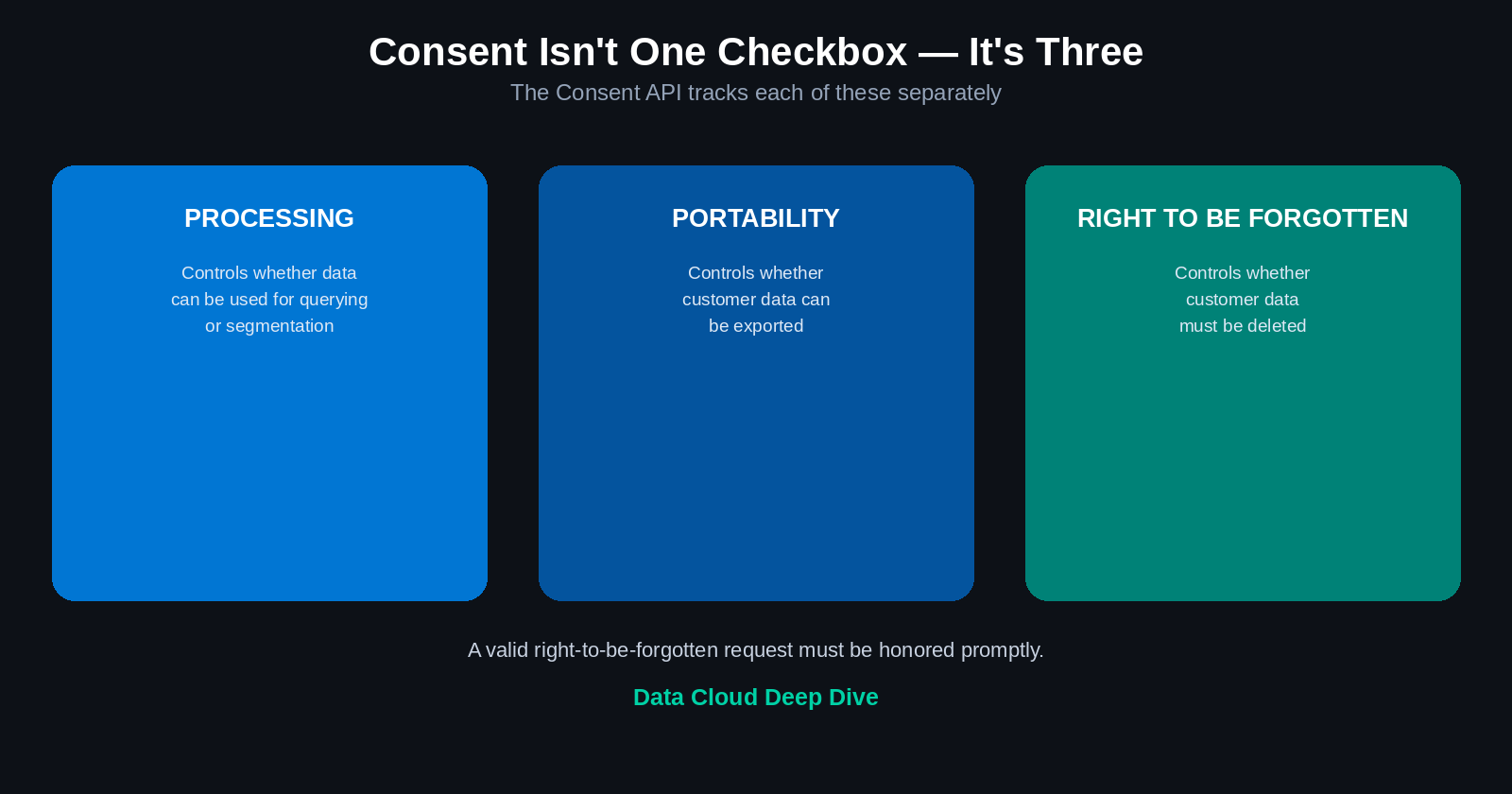
Table of Contents
- What is data ethics?
- Why data ethics matters
- Key data ethics principles
- How Data Cloud supports data ethics
- Practical data ethics review
- Avoid ingesting everything
- Key takeaway
1. What is data ethics?
Data ethics refers to the moral principles governing how customer data is collected, processed, stored, and shared. The objective is to use customer data responsibly, transparently, and ethically.
2. Why data ethics matters
Before ingesting customer data into Data Cloud, organizations should ensure that: customers have provided appropriate consent, data is used only for its intended purpose, sensitive and personally identifiable information is protected, applicable regulatory requirements are followed, and customers understand the value they receive in exchange for sharing data.
Trust is essential. Even a strong data strategy can fail if customers don't trust how their data is being used. This is worth sitting with, because it's easy to treat ethics as a compliance checkbox rather than something that determines whether the whole platform actually works — a Customer 360 view built on data people didn't knowingly agree to share is a liability, not an asset.
3. Key data ethics principles
Collect only necessary data. Don't collect data simply because it's available. Collect only what's required to support the business purpose.
Use data appropriately and transparently. Customers should understand what data is being used, why it's being used, how it will be used, and who may access or receive it.
Respect consent and context. Consent should reflect the purpose and context for which the customer shared the data. Consent given for one purpose doesn't automatically extend to another.
Provide clear value exchange. Customers should receive a clear benefit or value in exchange for providing their data.
Protect sensitive data. Sensitive data and personally identifiable information require additional safeguards and careful handling.
Maintain regulatory compliance. Data practices must comply with applicable privacy and data-protection requirements. Always verify current requirements with authorized privacy, security, and legal resources — this isn't something to guess at from general knowledge.
4. How Data Cloud supports data ethics
Privacy data model. Data Cloud provides a privacy data model to help manage customer consent and data-use preferences. It can capture information such as customer consent, consent context, intended data usage, communication preferences, and authorization information. Examples of related standard DMOs include Authorization Form Consent and Communication Subscription.
Consent API. The Consent API can help capture and manage real-time customer consent. The course identifies three important consent actions:
| Consent action | Meaning |
|---|---|
| Processing | Determines whether data can be used for querying or segmentation |
| Portability | Determines whether customer data can be exported |
| Right to be forgotten | Determines whether customer data must be deleted |
If a valid right-to-be-forgotten request is received, the organization must follow its approved deletion process promptly. This isn't a "get to it eventually" item — it's a defined obligation with an expectation of timeliness attached.
5. Practical data ethics review
Before using customer data, ask:
- Do we have permission to use this data?
- Was consent given for this specific purpose?
- Are we collecting more data than necessary?
- Are we using the data transparently?
- Is the data sensitive or personally identifiable?
- Are access and sharing appropriately controlled?
- Can the customer request access, portability, or deletion?
- Are applicable compliance requirements addressed?
6. Avoid ingesting everything
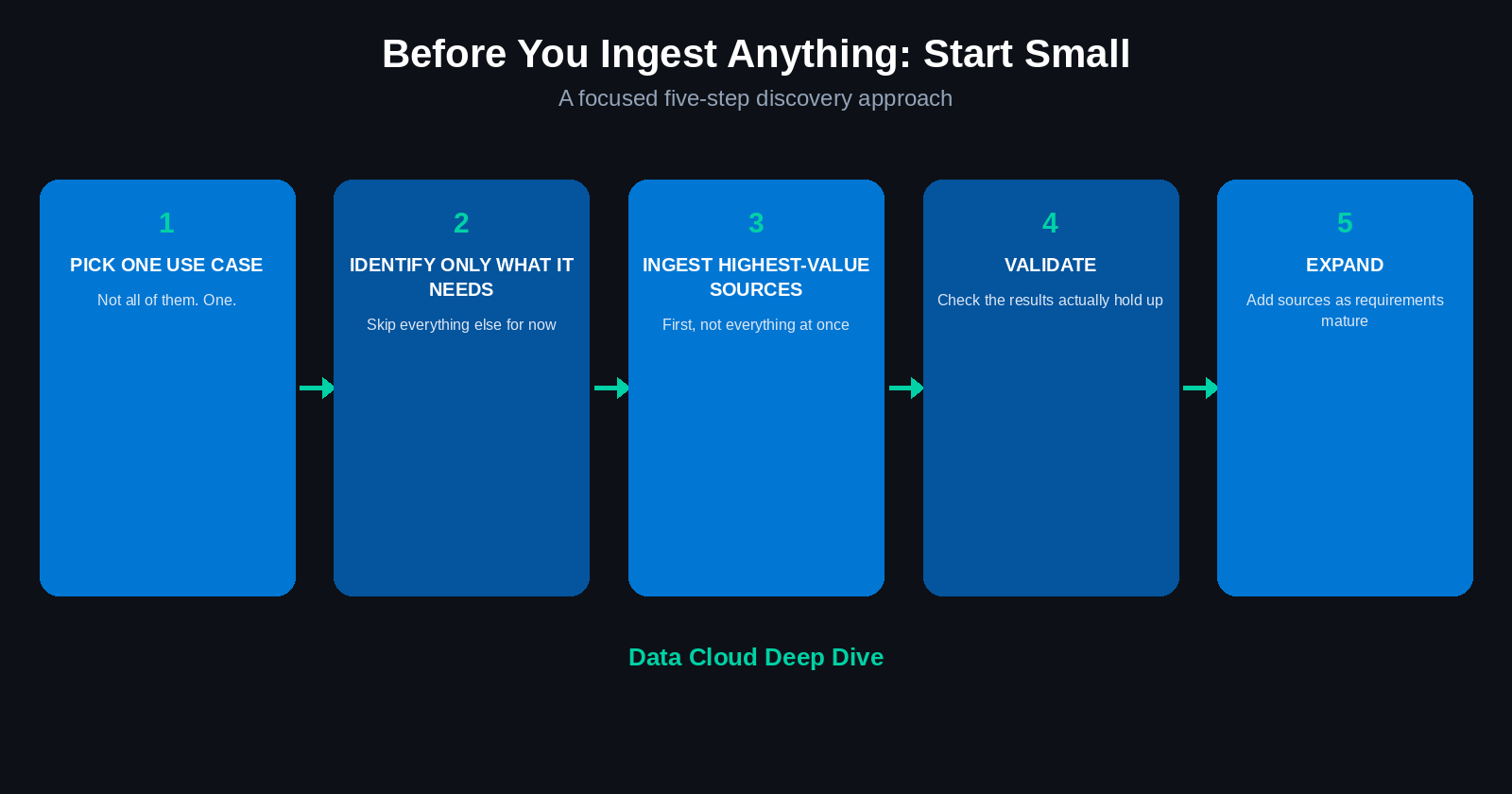
A common implementation mistake is bringing all available data into Data Cloud simply because it's accessible. Before ingesting a source, ask:
- Where does the data originate?
- Who owns and maintains the data?
- How frequently does the data change?
- Is the data complete, accurate, and accessible?
Combine this with the earlier "collect only necessary data" principle and the pattern is clear: more data isn't automatically more valuable. It's more surface area for consent gaps, stale records, and compliance risk — all for data that may never actually get used.
7. Key takeaway
Data ethics is a foundational part of Data Cloud implementation, not an afterthought bolted on once the technical build is done. Establish consent, purpose limitation, transparency, privacy controls, and customer trust before ingesting and activating customer data.
| Concept | Purpose |
|---|---|
| Data ethics | Governs responsible data use |
| Privacy data model | Stores consent and privacy preferences |
| Consent API | Captures and manages consent programmatically |
| Processing | Controls data use for querying or segmentation |
| Portability | Controls data export |
| Right to be forgotten | Supports customer data deletion requests |
Quick knowledge check
- What is data ethics, in one sentence?
- Why can a strong data strategy still fail without customer trust?
- What does "respect consent and context" actually mean in practice?
- What does Data Cloud's privacy data model help manage?
- What are the three consent actions tracked by the Consent API?
- What's expected of an organization that receives a valid right-to-be-forgotten request?
- What questions should be asked before ingesting a new data source?